Aug 272010
 

Imagine that Dr. Frankenstein woke up after a bender one morning and decided to stitch together pieces of Lamb of God, Exodus, Atheist, Black Dahlia Murder, and maybe the pancreas from Hatebreed. Throwing the switch to charge his creation with life-giving power, the good doctor would then stand back in amazement as the powerful creature climbed off the operating table and began to rage. And it would sound something like a Connecticut band called Guerra.

Guerra released its debut album, Transmissions Through Oil and Blood, back in April, but we only discovered it recently. That debut release was preceded by hard years of playing live shows, including opening for some heavyweight names, and working on the songs that have now been collected on that album.

We could have picked a different collection of bands for our Frankenstein metaphor, and to be clear, we’re not saying Guerra is yet in the same league as the bands we mentioned.

What we were trying to convey is this: Guerra succeeds in pulling together a diverse range of metal styles, and doing it in a way that seems natural and unforced, to produce music that’s both engrossing and massively ass-kicking.  Needless to say, we do like it, a lot.  (more after the jump, including Guerra music to hear . . .) Continue reading »

Aug 252010
 

Ten days ago, we included some extended comments in one of our MISCELLANY posts about a Swedish band called Canopy, and we also put up a video of a Canopy song off the band’s 2009 album, Will and Perception.

We also found out that the day before we put up those posts, Canopy had released a new album called Menhir. We were so taken with the songs we heard from Will and Perception that we immediately got Menhir and we’ve been listening to it off and on since then.

It constantly amazes us how many talented bands are turning out excellent metal in Europe (and elsewhere in the world, for that matter) but are virtual unknowns in North America. Canopy is a perfect example.

We hope that Menhir changes that picture, because it’s packed with memorable music — a very strong follow-up to Will and Perception, which is itself an album worth tracking down. (our review of the album, plus a track for you to hear, plus links for free downloads — all that, and more, after the jump . . .) Continue reading »

Aug 202010
 

We first stumbled across an unsigned Oregon band called Arkhum about six weeks ago. We were intrigued by the striking cover art for a yet-to-be-released album and included the band in one of our occasional EYE-CATCHERS features (here). At that time, the only music we had available to us were rough mixes of two songs for the forthcoming album and an earlier 2009 track. But those three songs certainly grabbed our attention in  a big way.

Much has happened to Arkhum in those six weeks. Today, the band officially releases its debut album, Anno Universum, and we can now report that they have been signed by the Vendlus Records label (home to such talented bands as Agalloch and Wolves in the Throne Room), which will begin distributing the album worldwide later this fall.

Arkhum was kind enough to give us an advance copy of the eight songs on Anno Universum and we’re happy to report that our earlier instincts about the band have proven to be correct: Anno Universum is stunning — one of the best debuts we’ve heard in 2010.

We got so excited about the music that we pestered Arkhum for an interview, and brothers Stephen and Kenneth Parker patiently answered our meandering questions. In the post immediately below this one, you can read that interview, which turned out to be pretty damned interesting.

In this post, we’ll try to explain why Anno Universum has made such a strong impression on us and why we think you’ll be hearing lots more about Arkhum in the months to come.  (more after the jump, including a song from the new album . . .) Continue reading »

Aug 172010
 

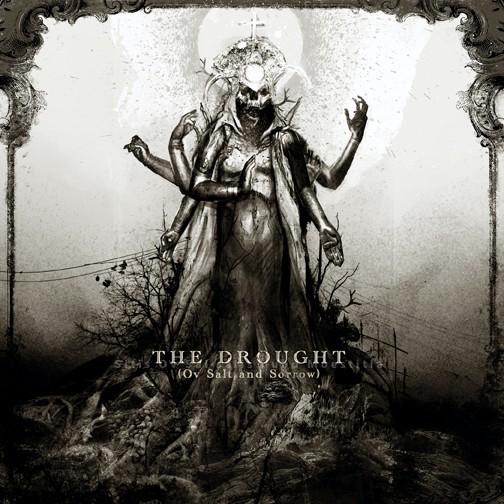
Pristina‘s first full-length album, The Drought (Ov Salt and Sorrow), is fascinating in its diversity. It crushes like a slab of granite dropped from a high place, and it’s also searing in its unbridled, hardcore ferocity. It’s salted with unnerving vocal samples and electronic noise, and it also delivers galvanizing riffs. It grinds like a lumbering, blood-drenched tank through a landscape of sludge, and it erupts like an out-of-control flamethrower.

The Drought is raw and uncompromising, and it’s one of the most riveting collections of music we’ve heard this year.

The album consists of only five songs. Four of them range in length from about 3 1/2 minutes to about 8 1/2 — and then there’s the closing title track. It’s a 23-minute piece of mind-bending inventiveness that overcame our instinctive trepidation about songs of that length: It neither drones nor drags nor bloats its length with instrumental wankery. It is instead an ingenious, multi-phased beast that’s worth every minute of attention it demands.

The opening track, “Moonshiner”, begins with an extended sample from one of Henry Rollins’ spoken word albums, accompanied by the repetition of crushing chords and a methodical drum rhythm. Following that bruising yet hypnotic intro, Pristina erupts with Brendan Duff’s acidic screams and shuddering jackhammer riffs. The crusty sludge of those opening minutes and the more febrile blasts that replaced it then alternate, with brief interludes of acoustic guitar sandwiched in between.

That opening track sets the stage for what follows. It’s drenched in fuzzed out distortion, anchored by a dominant rhythm section, and propelled by remarkably inventive, expertly executed drumming.  (more after the jump . . .) Continue reading »

Aug 152010
 

With their just-released third album, entitled Leere, Germany’s Thorngoth has created an opus of searingly intense but hauntingly beautiful black music.

In English, the German word “leere” means emptiness, and in assorted German-language interviews the band’s principal creative force, Sorath, has explained that the album is intended to reflect aspects of our current time — in which much of human society experiences emotional emptiness in their daily lives and a depressive hollowness, devoid of meaning.

As a reflection of that concept, Leere is indeed filled with melancholy. The music creates an atmosphere that’s dark and brooding. Yet it’s also piercing and impassioned, charged with hammering rhythms and attention-grabbing bursts of technicality. Regardless of the underlying concept, the music itself is anything but empty. Listening to the whole album in a single sitting is a completely enveloping experience that’s both dreamlike and headbangingly intense.

With the exception of a short instrumental track, called “In der leere” (into the void), the songs on the album have no titles other than Roman numerals — “Leere I” through “Leere VIII”. So the titles don’t give many clues about the songs’ meaning. In addition, Thorngoth’s vocalist, Akhorahil, sings in German, and we’re not sure we could make out all the words even if he were singing in English.

But those Sorath interviews do give more clues to what’s going on lyrically.  (more after the jump, including a song to hear . . . ) Continue reading »

Aug 132010
 

Earlier this week we posted our laudatory review of a debut album called Proclamation by a Montreal melodic death metal band called Incarnia. In the review, we featured a song called “Yersinia Pestis”, which in addition to being the name of the song is also the name of the bacterium that causes the black plague. That song got stuck in our heads, and so we tried to decipher the lyrics by listening to the song repeatedly — because we didn’t have a physical copy of the CD with the lyrics and couldn’t find them posted anywhere on the netz.

We did our best, but we couldn’t make out all the words just from listening. And then we got the hare-brained idea to run a little contest. We invited our readers to e-mail us their guesses about the missing words, or to correct the words we deciphered if people thought we got them wrong. As a reward, we promised to send a copy of the Proclamation CD to everyone who submitted a correct guess.

We got what, for us, was a flood of hits on the Incarnia review, but we didn’t get many entrants in our lyrics sweepstakes. Possible explanations:

(a)  Our readers are very shy.

(b)  Unlike us, most of our readers aren’t obsessive enough to listen to the same song over and over and over again in an attempt to decipher a few missing words.

(c)  Other people who listened to the song had just as much trouble as we did figuring out what the vocalist was singing.

But although we didn’t get a lot of submissions in our Incarnia sweepstakes, we do have two winners. After the jump, we’ll reveal their names, along with the correct lyrics to the song, which we got from the band. And because we think Proclamation is such hot shit, we’ll provide one more song from the album for you to stream. Continue reading »

Aug 122010
 

In one of yesterday’s posts, we briefly mentioned a band called Father Befouled. We wrote that we’d have more to say — and so we do.

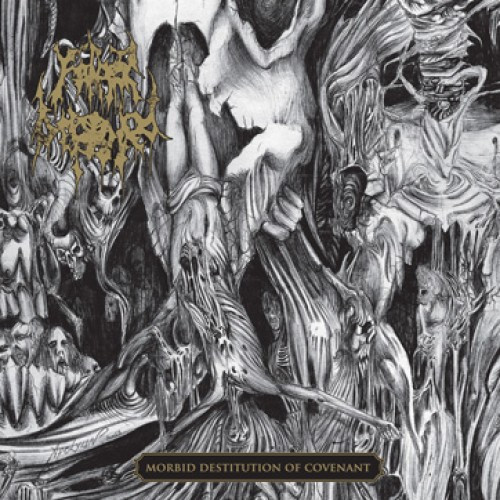
Relapse Records announced earlier this week that it had signed the band for release of their new album, which is the second full-length, following 2008’s Obscurus Nex Cultus. In between, the band released a couple of EPs and appeared on a couple of splits, and suffered the suicide of their drummer (Antichristus). The new album — Morbid Destitution of Covenant — will be released September 14 on CD, but it’s already available digitally on iTunes (as is the first album) and elsewhere.

The band appears to be composed of people who now live in Chicago and in Georgia. In an interesting interview that pre-dated completion of the album (here), Father Defouled’s guitarist/vocalist Ghoat identified Incantation and Immolation as the band’s principal influences. If you’re familiar with the work of those bands, they will certainly spring to mind if you listen to Morbid Destitution, and seeing those names will give you an idea what the music sounds like.

Let me try to give you a further idea by stringing together a whole bunch of adjectives instead of using them in separate sentences. The music is:

Oppressive, bleak, doomed, ominous, claustrophobic, jagged, intense, hopeless, grinding, serpentine, ponderous, funereal, black, crushing, and ugly.

At times, it’s also: Furious, razor-edged, insectile, shrill, vicious, harrowing, paranoid, and explosive.

(more after the jump, including a track to hear . . .) Continue reading »
Aug 102010
 

If you’ve read our earlier post today with our review of the debut album (Proclamation) by Montreal’s Incarnia, you know that we’re hooked on the band. You also know that we’ve been trying to decipher the lyrics to a killer song from the album called “Yersinia Pestis”, which you can hear via our earlier post.

To incentivize you readers to help us fill in the missing lyrics — because it’s driving us crazy — here’s what we’re gonna do: For every reader who correctly fills in one of the missing blanks in the lyrics as they’re currently set out in our original post — or accurately corrects any lyrics that we were wrong about — we will send you a physical copy of the Proclamation CD. Even if some other reader also makes the same correct guess you do, you still win.

Of course, our ability to determine whether you’re right or wrong depends on our success in trying to contact the band and get the actual lyrics. But surely, we will hear from them eventually . . . .

You may ask, “How can NCS make this offer when it doesn’t have any physical copies of the Proclamation CD?” (Because, if we did, we might already know the lyrics.) For the answer to that astute question, and more details about our offer, continue reading after the jump . . . . Continue reading »

Aug 102010
 

Do you like keyboard-driven, Gothenburg-style melodic death metal that’s catchy as ebola and both beautiful and evil enough to keep a serrated edge on it? Well, if you do, have we got a band for you: Incarnia.

Incarnia is from Montreal, Scandinavia. Okay, maybe Montreal is in Canada (we read that somewhere), but Incarnia’s musical hearts reside in the land of bands like Dark Tranquillity, Insomnium, late-stage Hypocrisy, Mors Principium Est, and (more recently) Zonaria.

My sometimes collaborator IntoTheDarkness urged me to listen to Incarnia’s just released debut album, Proclamation (on Panoptic Records). His tastes and mine don’t always mesh, but man, they sure did this time.

For a young band’s debut release, Proclamation is a remarkably assured, remarkably sophisticated offering of melody-drenched melodeath that also triggers the headbang reflex quite nicely. The more we’ve listened, the more massively hooked we’ve become (more after the jump, including a sample track to hear . . .) Continue reading »

Aug 092010
 

Just when we were beginning to think it was a law that all metal bands from North Carolina south to the Florida border had to sound like Mastodon or Baroness, we discovered Wretched and their new album Beyond the Gate (with that very cool Dan Seagrave album cover). Not that we have anything against Mastodon or Baroness. In fact, we’re fans. But Wretched ain’t cut from that cloth, not by a long shot.

Instead, in their new album on Victory Records, North Carolina’s Wretched are wearing the mantle of melodic, technical death metal with some interesting progressive threads woven into the fabric. Think about bands like The Faceless, Veil of Maya, and Black Dahlia Murder, and you’ll start to get close to Wretched’s musical territory. But there are also some big surprises in store.

Seven of the album’s 11 songs are fast-paced and feature shuddering rhythms with jolting staccato bass lines and weaponlike drumming, intricate math-metal riffs, and fire-breathing guitar leads and solos. The vocals are predominantly mid-range growlers, but they occasionally drop lower or vault higher into cutting shrieks.

But those seven songs aren’t simply exhibits in a case of “let me prove how fast I can play.” They’re actual songs, with structure and melody, that happen to be executed with a lot of fancy fretwork and blazing double-kicks. Wretched also spices up a few of those songs with some attention-grabbing surprises, like the brief extract from a Cuban folk song at the end of “Birthing Sloth” or the cello-and-guitar outro at the conclusion of “The Talisman”.

But there are four songs left to be discussed. They’re all instrumentals, and they’re not at all what you would expect from the musical style of the other seven.  (more after the jump, including a sample track and more examples of Dan Seagrave’s eye-catching album covers . . .) Continue reading »