Dec 102012
 

(After a scholastically forced absence from NCS, TheMadIsraeli returns with a review of the latest album by Italy’s Subhuman.)

Celebrate NCS readers. My time in the corrupt prison of academia is over.  I can write about shit that’s fucking metal again.

Subhuman are a somewhat long-running savage death-thrash band from Italy, and if you’ve been following us, you know Oblivion guitarist Ted O’Neill has been telling us about how awesome Italy is right now in producing music that’s all things brutal.  It’s finally my turn to get on board with something of substantial value, and that is Tributo Di Sangue.

In my estimation, we’ve had few releases this year that comprise the sheer adrenaline rush this album delivers.  That isn’t to say that albums without the adrenaline rush haven’t been good, but it’s refreshing, always, to have something this straight-forward amidst what else is out there.  This is exactly just death-thrash.  If you like Hatesphere, Dew Scented, or Vader, then this is up your alley for sure.  It’s up mine.

The music of Subhuman is a torrent of double-bass-saturated, blast-beat-intense drumming, razor-sharp riffing with Exodus swagger, Decapitated ferocity, and Vader-esque war-making intensity, accompanied by vocals of in an old school Obituary/Death/Pestilence vein. Continue reading »

Dec 102012
 

If there were ever a band name that should receive a “Truth In Advertising” award, it would be Bestial Warlust.

The band formed in Melbourne, Australia in 1993 and blasted out of the gates with two full-length albums in 1994 (Vengeance War ‘Till Death) and 1995 (Blood & Valour). They followed those with two short demos and a split, and then the band dissolved.

The second demo was a three-song release entitled Satan’s Fist. Before it was recorded, guitarist K.K. Warslut had moved on to Destroyer666 and vocalist Damon Bloodstorm (now with Cemetery Urn) had left to join Abominator, leaving two of the band’s members to record Satan’s Fist: drummer Marcus Hellcunt (now with Vomitor) and guitarist/vocalist Skullfucker.

Hells Headbangers has unearthed Satan’s Fist and has recently released it on both 12″ vinyl and CD (here). Although Bestial Warlust proved to be quite influential in the development of warlike blackened death metal as a sub-genre, listening to Satan’s Fist is not like journeying back to 1996 for a history lesson. It’s a scathing sonic assault that has lost none of its riveting appeal with the passage of time, and it more than holds its own with the best blackened death releases of 2012. Continue reading »

Dec 052012
 

HAIL GZOROTH!!!

If all you know about Orcs comes from the slanderous, grotesquely inaccurate fantasies presented as fact by that blasphemous charlatan JRR Tolkein (may he roast in the firepits of Hirntodia for eternity), then you might think Orcs are nothing more than brutish, filthy, degraded demons with a taste for human flesh, incapable of creating quality death metal. You shall learn differently (or you shall perish, by the will of the Great Chaos Dragon Gzoroth).

Adding Heads To the Pile by A Band of Orcs was released earlier this fall by Itchy Music and Entertainment and represents the Gore-Stained Axe-Tribe’s first full-length masterpiece, for which all devoted slaves have waited in agony over the five long years that have passed since the Orcs’ debut EP WarChiefs of the Apocalypse emerged to universal acclaim in 2007. Lyrically, the album tells a story of war, betrayal, and vengeance. Musically, the album carves that story into the brain with a diverse collection of remarkably good songs.

HAIL GZOROTH!!!

In style, the album can be divided into two parts with the short, unusual instrumental track “The Darkness That Comes Before” as the demarcation point. The five songs that come before it are generally blistering flamethrowers of death-infused thrash. They’re serious hell-for-leather head-snappers, with a mix of high-octane riffs, jolting rhythms, and flashy guitar solos that skitter, swarm, and writhe like humans under the knife.

These fast-movers benefit from a super-tight rhythm section and a technically impressive array of accelerated guitar licks, and Gogog brings a deliciously evil mix of throaty roars and wrenching shrieks in his vocals. Of these songs in the album’s first half, all of which are galvanizing, “In the Keeper’s Chamber” is the standout. Continue reading »

Dec 032012
 

(Andy Synn reviews the new album by Sweden’s Shining, which is out now on the Spinefarm Records label.)

The more things change, the more they stay the same…

(yes, I know I’ve used that before, but it was good then, and it’s still good now, alright?).

Shining’s eighth full-length album, the evocatively titled Redefining Darkness, certainly seems (on the surface at least) to signal a new era for the band. Everything about the record, from its stark cover to its brilliantly direct title, leads you to expect the band to have made potentially drastic changes to their sound, their musical identity, their direction. So could this this really be the same Shining we’ve all come to know and “love”?

Well it seems like the Swedish tricksters have made fools of us all once again. Continue reading »

Dec 022012
 

From the inception of NCS, one of our goals has been to put the spotlight not only on bands whose names are well known but also on lesser known creators of extreme music. This MISCELLANY series has always been one way of doing that, but over the last year I’ve let lots of time go by in between MISCELLANY installments.

So I’m making a new resolution: I’ll start running a new MISCELLANY post once a week going forward. I hope that one works out better than the one I made about not spitting in other people’s beer.

Remember the MISCELLANY rules: I pick bands whose names are unknown to me, using a very impulsive and usually random selection process; I listen to one or two songs (though sometimes I cheat on the number); I write my impressions of the music; and I stream what I heard so you can judge for yourselves. These posts are obviously less than full reviews, but they’re better than no reviews at all — and unfortunately we just don’t have time to review everything that comes our way.

And also remember this: Though I’ve had uncannily good luck with most of the MISCELLANY selections, I don’t know in advance what the music is going to sound like or whether it’s something I’d normally recommend. By definition, this series is all about surprises.

So, here we go: Today’s picks are Among Gods (Norway), Dead Warrior (Argentina), and Bury the Crown (U.S. – Houston). Continue reading »

Nov 292012
 

RXYZYXR and I go back a ways, back to their four-song instrumental demo in 2010 called Geometrical Metal, though I didn’t discover it until first being caught up in the videos they made for two later songs — “Denial of Death” and “Polar Knights” — which I wrote about in July 2011. By that point, the instrumentalists in the band (whose precise overseas locations are still not clear to me) had joined forces with a talented Florida-based vocalist named Tommy Wills.

Earlier this month RXYZYXR finally released a full-fledged debut album, and by full-fledged I mean 13 songs and nearly a solid hour of music, including those two songs that first grabbed me back in 2011. Continuing to shun vowels, the band have named the album LMNTS, and it’s available on both iTunes and Bandcamp.

When I first heard the band’s music, I began comparing them favorably to the likes of Textures and CiLiCe, whose vocalist Daniel de Jongh moved over to Textures and made his debut with that band on 2011’s wonderful Duality. Having now heard LMNTS, the comparison is even more apt, and yet RXYZYXR have integrated more stylistic variety into their music than even those comparisons would suggest.

At the core of RXYZYXR’s music is the kind of Meshuggah-influenced polyrhythmic pummeling that fellow blogger Angry Metal Guy once delightfully termed “high-IQ-riffage”. The unpredictable, unstable rhythms are heavy as lead and yet bound and dart like cheetahs in a high-speed chase. Continue reading »

Nov 292012
 

(Here is Part 2 of an extensive guest review by Rob Watson that began yesterday [here]. The music can again be found at the end.)

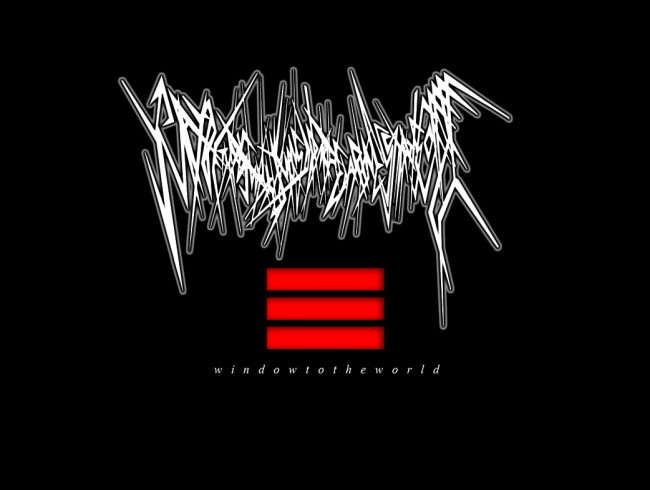
Last time, I got to grips with the opening three tracks of Window to the World. However, these first three songs may be difficult to appreciate if you are not an avid fan of the intimidation, claustrophobia, and general evil that enters into the sound of a lot of modern metal (a band that exemplifies this approach to sound are the Australian death metal outfit Portal). When I listen to the former half of Window to the World, I almost feel as if oxygen is gradually being sucked from the music, so that soon there will be no fresh air to breath and I will be unable to remain in the narcotic wasteland that has been carved within the music. Fortunately, much of the second half is pure melodious oxygen, fulfilling, magnificent, and blossoming with a totally different character than the first.

This metamorphosis of sound begins with ‘The Sanest Sentence’, which is probably the most in-depth song on the album compositionally. It begins very gently, as though it is barely there at all. The development of the music is like what you might see at dawn on a cold morning from within a wood, the light slowly penetrating the foliage. It is rather like a revelation, of sorts: A new corridor within the synaptic networks of the mind is being explored by this gentler, more graceful side to the band’s work.

Unlike many of the motifs and riffs that have gone before in this album, it has a strongly rooted harmonic structure. The chromatic, jarring style of the earlier parts of the album, which resembled classical composers such as Stravinsky or some of Shostakovich’s more aggressive compositions, has been replaced by something more akin to Ravel or Debussy. The immense beauty and simplicity of pieces like ‘Pavane Pour Une Infante Défunte’ or ‘Prélude à l’ Après-midi d’un Faune’ display a similar character to the opening of ‘The Sanest Sentence’, as do certain themes from video game soundtracks, especially those composed by Nobuo Uematsu (the Final Fantasy series is the most famous of his game soundtracks). Continue reading »

Nov 282012
 

(We apparently have a reputation among some denizens of the web for being a “long-winded” metal site. The following guest review by Rob Watson will do nothing to change that reputation. In fact, it’s so extensive that we’re dividing it into two parts, with Part 2 coming tomorrow [now posted here]. The music can be found at the end.)

“Robert, this object has wu.” This is the sentence that immediately sprung into my thoughts when I first heard the debut album of Maybe That’s Why Human’s Drink the Darkness That is Coffee, Window to the World. The sentence comes from a book by Philip K. Dick, one of my favourite writers, and refers to something which “represents nothing”. It uses the word ‘wu’ in derivation from the Taoist spiritual text the I Ching, in which the concept of ‘wu wei’ is to possess the foresight to know when to act and when not; to be able to drift effortlessly upon the breeze of time, merely glancing off the fabric of reality, balancing the forces that flow constantly through it, opening up endless possibilities of interconnectedness among the corridors of the universe. In short, the aforementioned object is very rare, and very, very special.

This is an important comparison, because it is the one that is most obvious, even to the casual listener. The album’s uniqueness is intrinsic to its appeal; it has a feel that, although not stretching as far as being ‘anti-music’, is most definitely ‘anti-djent’ (if ‘djent’ is defined to be a genre of music stereotypically featuring downtuned 8-string guitars, pristine production devoid of almost any organic substance, and syncopated palm-muted double-octave power chords).

Another key concept of Taoism is that of Yin and Yang (dark and light). The idea of ultimate polarity existing within the universe and resident in all things (though not always with both poles together) is a facet of this album that is central to its purpose. Parts of this album will twist your ears into a new, as yet undefined shape; so random and unprecedented are the levels of raw energy that it exudes that at times you may feel completely disillusioned and perhaps even put off from persevering with the album. However, the band temper their brutal, uncaring approach with melodic passages that will make you want to shed a tear or drift off, unhampered by gravity, to far-away lands of permanent plenitude, unscathed by the atrocities of human society. Continue reading »

Nov 262012
 

In this day and age there’s not much you can do to a shot of undiluted death metal without turning it into a different kind of cocktail. But if you’re going to consume it straight up, there are big differences between the premium brands and the cheap stuff that’s kept under the bar at your local corner of Hell. Aeons Black, the new fourth album by Sweden’s Aeon, is the top-shelf stuff, and worth every penny. And you don’t get cheated on the pour either: the album is a 15-track monster with a 51-minute run time.

Aeons Black is not only premium face-melting death metal, it’s also one of the top 5 death metal albums of the year. You know I hate making lists, so I don’t know what the other four albums are. I just can’t imagine that more than four would be in this league.

Aeon are often compared to the likes of Cannibal Corpse and Deicide, and they prove once again on the new album that they can indeed hold their own with those titans of Floridian death metal, while incorporating the blazing fretwork of Suffocation as well. The riffs on high-speed numbers such as “Still They Pray” and “Nothing Left To Destroy”, which make up the majority of the songs, are absolutely blistering. And they’re matched by the furious drumming of Arttu Malkki, who has returned to the band after an absence that began after Aeon’s 2001 debut EP Dark Order.

But even the album’s most superheated songs are not simply open-wide flamethrowers spewing hellfire. They’re marked by big, hook-filled, piston-driven rhythms that hammer and pummel and blast like big, heavy-caliber weaponry. If you can’t get a powerful head-slam going while listening to this album, you need to check into a nursing home. Continue reading »

Nov 242012
 

Five years ago, former Excessum bandmates Daniel “Contagion” Abrahamsson and Lars Broddesson (Marduk) joined forces with vocalist K.W. (Ad Hominem) to record a two-song EP, with Daniel on bass and Lars on drums and both of them laying down guitar tracks. They chose The Ascendant as the name of their band. The songs were never released.

Fast-forward to 2012, and Daemon Worship Productions reaches an agreement with The Ascendant to release the two songs as an EP on vinyl and CD under the name The Spiritual Death, with accompanying artwork by Grindwerkz. Why it took five years for the songs to emerge is a mystery, especially because they are so damned good.

On one level, the music simply rips hell. The guitars blaze with infernal fire, jabbing, tearing, and grinding in a whirr of tremolo fury. The jet-fueled drum performance hits like high-caliber weaponry on full auto. Big, booming bass chords surface and come down like anvil blows. And K.W.’s mid-range vocals howl like an ice storm.

On another level, the music reaches near-epic levels of grandeur, with memorable, dramatic guitar melodies rising on wings through the shrapnel clouds. Continue reading »