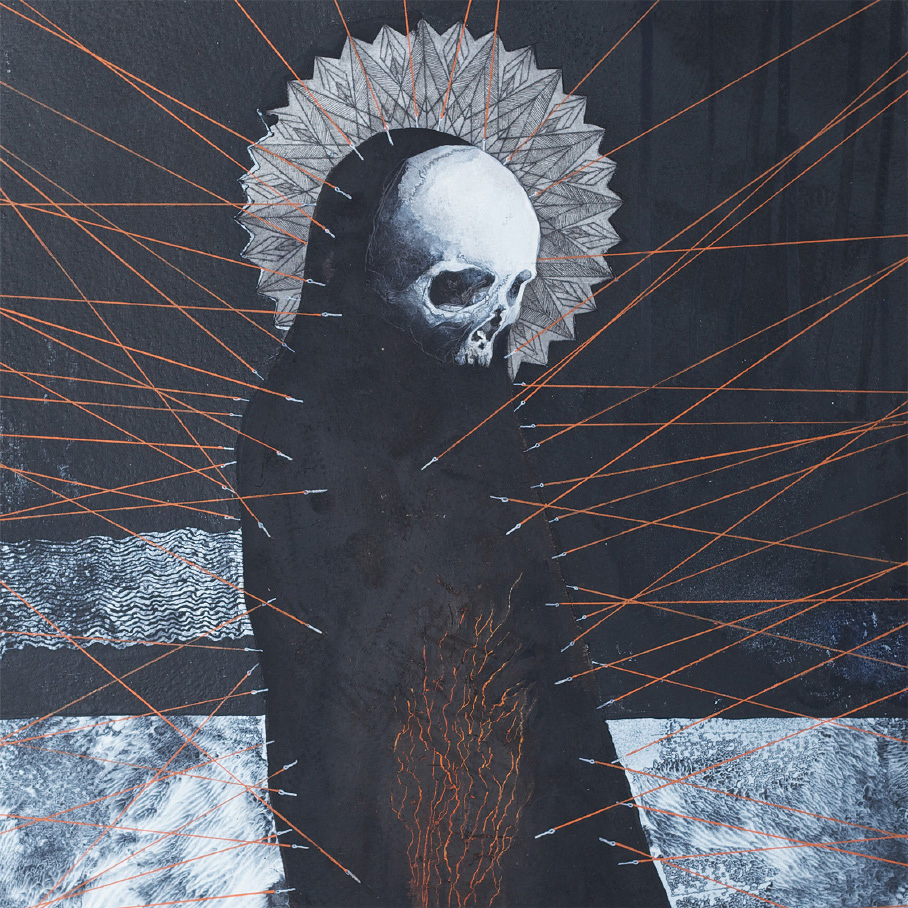
There’s an unusual story behind the making of his album, one that’s both painful and inspiring. If you know the story, it can’t help but affect the way you hear the music. And that’s as it should be, because the story is at the heart of the writing and the recording of the music, too. That story has been told elsewhere, through our own interview of the music’s creator Aaron Edge, and an even more in-depth interview that appeared last week at The Obelisk. But even if you were ignorant about the album’s deeper significance, it would still hit with tremendous force.
For an album that consists of seven tracks totaling only about 25 minutes of music, there’s a temptation to say that it flies by. It does, and it doesn’t. You can read first-hand accounts of combat or other traumatic events, in which time seems to slow down. The intensity of Lumbar’s album plays a similar trick on the mind. The music itself moves in slow time, the massive distorted chords flowing like magma, groaning like titanic drawbridges being raised with rusted chains, pounding like a wrecking ball. But the slow rhythms are only part of the explanation for the music’s time-warping effect.
The sound is incredibly dense and contaminated, the guitars fuzz-bombed to the max, the music vibrating with radioactive decay, almost every second shrouded in a storm of static. The black, hallucinatory aura of the music is intensified by the layering of shrill, skittering electronic noise, shimmering cymbals, and a mega-dose of reverb. The harrowing sense of things falling apart, which pervades the album, reaches its apotheosis in “Day Five”, where rhythms and even the rudiments of melody are abandoned, leaving only the sounds of distant thunder growing into a battlefield bombardment and the howling of demented voices. Continue reading »