Apr 112011
 

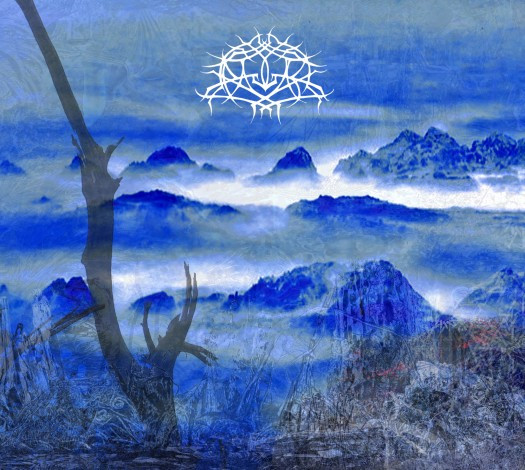
(Regular NCS contributor BadWolf continues to explore an alternative to traditional album reviews in this, his latest “critique”. The subject is the new offering from New York’s Krallice, scheduled for release by Profound Lore on April 26.)

Krallice’s Diotima record reminds me most of the scene in David Fincher’s Fight Club where the narrator and Tyler Durden are speeding in a car along a bridge and release the steering wheel. Speed increases, their trajectory veers, and tension increases because the logical conclusion is not foregone, but seems pretty inevitable. The anxiety, the dark sound in that scene comes from a desire to see the characters crash and by proxy for the audience to feel the impact of a death, or near-death, experience. Sartre was obsessed with looking off the edges of cliffs because he felt (and believed all people felt) a sublime desire to jump.

Krallice in 2011 feels like that razor’s edge between stillness and leaping when the band fires on all cylinders. There is a constant sense of swerving momentum which is in the most focus. The feeling is not unique to Krallice—Iron Maiden’s Aces High is about harnessing the freefall effect, and at their best Metallica and Gojira can evoke the same reaction. Diotima is the first record I’ve heard to emphasize it to this degree.  (more after the jump . . .) Continue reading »

Apr 092011
 

You say the words “death metal” — and I do mean “death metal”, not “melodic death metal” — to any metalhead who doesn’t like and appreciate the genre, and they’re likely to lump all of it together in one sweeping dismissal. Of course, as fans of the genre well know, “death metal” encompasses a great variety of sounds and styles. Sometimes the differences are subtle, particularly on the more “brutal” end of the spectrum, but the distinctions are what keep DM addicts diving back into the black pool over and over again.

Those thoughts have been rumbling around my head since I started listening to the music of three South African death metal bands, repeatedly, for this post. I’ve been sitting on music from two of those bands way too long without saying something about them. More recently, we were contacted by a third band from South Africa, and that finally pushed me to get this post done.

Before now, I think the only South African band we’ve featured at NCS has been the ingeniously named, bagpipe-driven Haggis and Bong (here, for example). I’m pretty sure I first heard about one of today’s threesome — All Forlorn — through a post by Haggis and Bong on their Facebook page. The other two — A Walk With the Wicked and Bile of Man — came our way via e-mails from the bands.

All three bands are loaded with talent, and two of the three have got music that’s available for free download. Following the jump are some thoughts about, and music from, each band, in the order in which we heard about them. Continue reading »

Apr 042011
 

(Regular NCS contributor BadWolf provides this critique of the new album by Germany’s Obscura.)

Simon Reynolds did an absolutely fantastic history of Drum N’ Bass/Dubstep (and all their subgenres) in The Wire magazine (thanks again, Michelle!). It is some of the best music journalism I know. An integral piece of his argument is that illicit drugs have an intimate relationship with the modern evolution of music. Stoner Metal’s existence is evidence that this phenomenon is present in metal as well.

If this is true, Obscura’s Omnivium is a strong case that death metal is fundamentally a house divided by preferences in substance abuse. To me, Bolt Thrower, Cannibal Corpse and Entombed are fundamentally barbiturate music (“We drink n’ drink n’ drink n’ drink n’ fight…”), while the bands that are Obscura’s obvious progenitors are, to me, death metal of hallucination.

Obscura have dropped the cold amphetamine speed of their previous disc Cosmogenesis, (which I enjoy more retroactively now that I have listened to Omnivium) and embraced psychedelia. Omnivium does not view time and space as limitations, but things to confuse the listener with. And how like a hallucinogen, prolonged exposure to Omnivium is first and foremost disorienting.

As their peers in Krallice are doing (according to an article in the new Decibel), Obscura have focused on the dissonant melodic elements present in old school DM, and rather than used them as breath-catching reprieves, have made them the complete focus of their sound. I would place these two bands, along with perhaps Decrepit Birth, at the forefront of a modern technical psychedelic metal movement as distinct from more minimalist bands too obvious to mention. (more after the jump . . . ) Continue reading »

Mar 312011
 

We started this week with a trio of posts on . . . viciousness (beginning here). Then we assisted in the disfigurement of a goddess. And yesterday was all about the venomous hatred in Anaal Nathrakh. Granted, we did have the thing about the epic Indian feed and the photos of Phro in a miniskirt, but musically speaking, it’s been a pretty pummeling week so far.

We do like to keep you a little off-balance here at NCS, so this seemed like a good day for something . . . completely different. Three completely different somethings, to be precise. We don’t often venture outside our comfort zone around here, but we’re definitely doing that today. The thing is, we’re still sort of staying true to the “no clean singing” mantra — because there’s no singing at all on our first offering, and almost none on the second.

So, ready, set, GO!

THE ALEX SKOLNICK TRIO

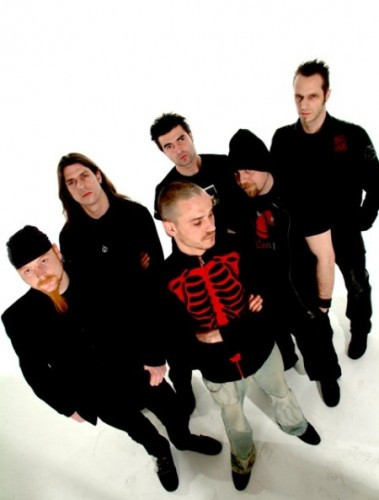
The last time we featured music similar to this next band (pictured above), it was the day before Thanksgiving last year. In a post called “Guitar Wizardry”, we featured new music from Joe Satriani and old music from Buckethead. That set off an interesting dialogue in the Comments section about guitar heroes and the connections between them, and of course, Alex Skolnick‘s name was mentioned more than once, in the same company as Paul Gilbert, Steve Vai, Allan Holdsworth, Jeff Young, Jeff Beck, and John Petrucci, along with Satriani (with whom Skolnick studied long ago) and Brian “Buckethead” Carroll. (more after the jump, including ear candy . . .) Continue reading »

Mar 302011
 

No band I’ve yet heard is currently pushing the limits of extreme metal more extravagantly and more successfully than Anaal Nathrakh. However, I won’t say they’re blazing a trail into the territory where the future of metal will take root. Metal will have many futures, but I suspect few of those futures will unfold along the tortured path Anaal Nathrakh is blazing; there’s too much risk of injury. More reason to live in the present – this present.

Some metal bands specialize in hair-on-fire, grindcore mayhem, played at the speed of bullets. Some specialize in the delivery of compulsively headbang-able riffage, heavy on the chainsaw guitar cutting through the bone. Some bands use keyboard-driven anthems to propel their music to emotional heights of struggle, or defiance, or loss.

Some plant their flag in the territory of industrial metal, with blasts of cold rhythm and waves of chaotic electronic noise. And some bands leaven their metallic catharsis with bursts of melody, voiced by soaring clean vocals, head thrown back and all of body and mind concentrated in the delivery.

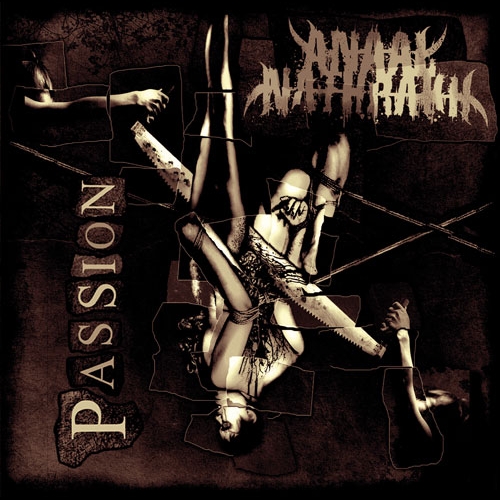
Anaal Nathrakh does all of this within almost every song on their new album Passion, and more besides. They dissect and segment and re-combine the elements of extreme metal in blazingly creative ways — but without fail, what they achieve is profoundly unsettling. It’s wondrous, but it’s almost unrelentingly disturbing. Passion is an expression of the “otherness” of extreme metal in one of its purest forms. (more after the jump . . .) Continue reading »

Mar 302011
 

(Our UK contributor Andy Synn provides the following review of Anaal Nathrakh’s forthcoming album, Passion. This is our first of two reviews of the album — the second, by your humble editor, is in the post above Andy’s. Some albums just demand extra attention.)

Passion is one thing that Anaal Nathrakh have never lacked, as their instrumental work is as frenzied and violent as one would expect and the terrifying vocals of Dave Hunt remain as overwhelmingly powerful as ever. But the word has other meanings as well, invoking images of suffering and martyrdom which seem appropriate given the harrowing atmospheres and inhuman cacophony the band conjure, as well as the lyrical bent of certain songs, whose themes of anarchy, dedication and personal desolation are perfectly captured by such a simple, yet complex, term.

The sheer, unadulterated misanthropy and seething hate which spews from the music of Anaal Nathrakh has always spoken to me in a particular way; the bile and fury they vomit forth clearly comes from a deep-seated, internal sense of existential angst and frustration. Yet the true strength of the band has always been their ability to take this incoherent rage and shape it consciously into a weapon directed outward at specific targets, turning an internal fury into an external fire. Thus, their urban-warfare approach to blackened grind and the cold, calculated lethality of their grinding black metal remains balanced by a very human element, making the band’s sound both natural and inorganic in equal measure.  (more after the jump . . .) Continue reading »

Mar 242011
 

Our own midwestern metalhead, BadWolf, delivers a review of Protest the Hero‘s new album, Scurrilous.

Perhaps you have been in a committed, long-term relationship with someone. Man, woman, transgender, it makes no difference because there are things within people that are universal, the same. There was, perhaps, a moment in that relationship when you realized that the primary devices of that person’s personality were no longer a mystery. You realized that, in all likelihood, that person would never provide you with a major surprise ever again. You may still love them, but that love will never again be a grand adventure: If you can live with that, it’s a good relationship. If not, it is time to end it.

Scurrilous is that moment in my relationship with Protest the Hero. I still love them, but they will never again give me a complete, breathtaking system shock – what their first two records both were, in different ways.

Perhaps the best compliment I could possibly give the young prodigies in PtH is that more than any other band they remind me of Queensryche—supremely talented and openly cheesy, highly conceptual and supremely catchy at the same time. Both bands use calculator riffs to deliver pop hooks, and use the songwriting techniques of their lesser peers so well that it redeems and damns their parent genres (metalcore and hair metal, respectively) all at once.

So if Fortress was their Operation: Mindcrime, Scurillous is their Empire. (more after the jump . . .) Continue reading »
Mar 232011
 

Our UK contributor Andy Synn joins us for the second day in a row, this time with his review of “Unseen” — the latest album by The Haunted, which was released to the masses in NorthAm yesterday.

I’ve sat with this album for quite a while now. My initial response to an early stream of the album was cautiously guarded, almost negative even, as I felt that although I enjoyed many of the songs, certain elements (particularly Peter Dolving‘s voice) seemed far more disjointed and separate from the tracks as a whole than ever before. All this quickly changed when I got my own copy of the album on cd and dedicated some real time to getting to know the album in depth. I loved it. Yet again I refrained from writing about it at the time, wanting to see if these initial feelings were themselves merely a response to my original disappointment or a symptom of my general worship of Dolving-era Haunted.

In the end I’ve found that the album is incredibly strong, although in many ways a true “grower” of a record, although not without its flaws. The early disparate comparisons (Tool, Korn, In Flames, Corrosion Of Conformity) prove themselves to be premature, as listening to the record  in full provides a much better picture of a singular and united piece of work that is consistently The Haunted, but works to naturally expand the remit of their sound. It reminds me in spirit, if not entirely in sound, of Vision Of Disorder‘s misconstrued masterpiece “From Bliss To Devastation”, wallowing in a similar mire of depravity and dysfunction that makes it just as heavy, but in a way totally different from their past work in general.

If you want me to give a simple summing up of the record, then I would say that it’s not quite as brilliant as The Dead Eye and stands perhaps on a par with (or perhaps just superior to) rEvolvEr, a record which has higher “highs” than this album, but also a greater incidence of filler. If nothing else, it’s a huge improvement on the inconsistent mess of often ill-judged experimentation that was Versus – I’d go so far as to pull out the old cliché about this record being the album Versus should have been, just as experimental but with more focus and overall better song-writing. (more after the jump . . .) Continue reading »

Mar 222011
 

NCS contributor Andy Synn returns with yet another retrospective. This time the subject is Oceans of Sadness from Belgium.

Unfortunately, this edition of The Synn Report is a posthumous one, as Oceans Of Sadness recently announced their split. I had originally intended to write something about this band at a later date, hoping that they would have a new release by then as their last album (their sixth) was released way back in 2008.

Sadly, these Belgian visionaries have made the decision to part ways, leaving behind them six full-length albums of darkly romantic, proggy metal whose lack of boundaries makes their sound both fascinating and at the same time difficult to classify in its entirety. As such I’m giving each album its own recommendation separately this time around. Quick warning: the band relies primarily on clean vocals accented by some death metal growls and black metal shrieks, not the other way around!

To my mind there are (broadly speaking) two forms of progressive music, linear progressive music and spherical progressive music. The former usually involves bands moving in a linear direction away from their original forms, growing and evolving along the way, often to a point where their sound and style are totally different from that of their earliest releases. The latter involves a band carving out a sound with a large potential scope based on a central point of consistency – this allows the band to experiment within this sphere (which varies in size and scope depending upon genre limitations, technical and compositional skills, etc) whilst maintaining a core sound.

Neither of these forms is entirely mutually exclusive, as bands who have mined their sonic sphere of all possibilities can be seen to break out onto a linear path in response, just as bands who have made a career out of linear growth can eventually find a sphere to inhabit in which they are most happy to exist. (more after the jump, including songs . . .) Continue reading »

Mar 192011
 

Most metal reviews are littered with cliches and overused words. I’m as guilty as anyone. Sometimes the explanation is laziness, sometimes a lack of imagination, sometimes limitations on the writer’s vocabulary. It’s not all bad, because sometimes the overused words function like a shorthand code: they quickly give readers a very general clue about whether it’s the kind of music that might suit their tastes. On the other hand, some of the words are so imprecise that they simply don’t do the music justice, or they can be downright misleading.

Let’s take “sludge” and “stoner metal”, for example. “Sludge” is a handy word to use, and most metalheads know what it connotes: down-tempo music with distorted guitars, heavy bass rhythms, and an air of doom. Sometimes the word is used in conjunction with “stoner metal”, which I guess happens when the music is less abrasive, maybe more psychedelic, maybe incorporating more instrumental jams, but I’m not 100% sure. By the way, does getting high and losing yourself in the music really correlate with one genre of metal more than another?

Anyway, on the subject of cliched, overused words, one thing I’ve noticed is that reviewers of sludge/stoner music can’t seem to resist throwing around “dirty” and “filthy” as adjectives. What the fuck does that mean anyway? I don’t listen to this kind of music often, but I listen enough to know that bands who wear the sludge/stoner label do not all sound alike, and calling their music “dirty” or “filthy” doesn’t help distinguish them. Does it?

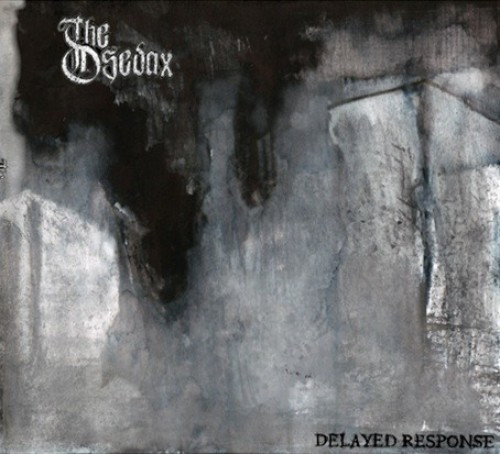
These thoughts are running through my head because I’ve been listening to an excellent debut album called Delayed Response by a Virginia band called The Osedax. Their music gets labeled “sludge” and “stoner” — hell, those are the words the band themselves use. But this is a case where those shorthand codewords really don’t do the music justice — there’s a whole lot more to it than what those labels might make you think. There’s also nothing about it that’s mellow; it’s seriously disturbing.  (more after the jump, including a song and a download link . . .) Continue reading »